- R GENERATION
- Posts
- ☕️ (R)emote Expresso #58
☕️ (R)emote Expresso #58
The Curiosity Recession: In defense of looking stupid in public

Deb Haas
January 13, 2026 • ⏰ Reading Time: 16 minutes
In partnership with

☕️ (R)emote Expresso is your weekly dose of creator insights on remote collaboration designed to fuel your day, delivered once a week in your inbox 💌

Hey Remote Rebels and Digital Daydreamers,
You know that moment in a Zoom meeting when you're about to unmute and ask a question - and then you don't?
Your finger hovers over the spacebar. Your brain runs the calculation: Is this obvious? Should I already know this? Can I just Google it after?
So you stay muted. You add "follow up on X" to your notes. You tell yourself you'll figure it out later.
Except "later" means alone. With seven browser tabs open. And a growing suspicion that everyone else somehow got a manual you didn't.
Here's what actually happened: You just opted out of connection because curiosity started to feel like risk.
Welcome to the Curiosity Recession - where asking dumb questions became a career liability, and we all got poorer for it.
This week, we're not optimizing. We're asking.

What We Lost When We Stopped Asking
Remember when you could just… lean over and ask?
"Hey, quick question—"
"Wait, how does this work again?"
"Am I missing something here?"
Those weren't interruptions. They were the actual work of collaboration.
Now? Asking a question requires:
Scheduling a meeting
Crafting the perfect Slack message (not too needy, not too stupid)
Googling first so you don't look incompetent
Checking if someone already answered it in a thread from 2022
Wondering if AI could just tell you instead
By the time you ask, the moment's dead.
And here's the reality: You're not learning alone. You're just lonely while you learn.
The curiosity recession isn't about lack of information. It's about the death of spontaneous not-knowing - the kind that used to spark conversations, build trust, and make you feel less alone in your confusion.
We didn't stop being curious. We just made curiosity feel like a performance review risk.

Why It Matters
Curiosity isn't a nice-to-have. It's the infrastructure.
When people stop asking questions, here's what actually breaks:
Trust collapses. You can't build psychological safety in a culture where "I don't know" feels like a confession. If curiosity is risky, collaboration becomes performance. Everyone's protecting their competence instead of actually learning together.
Knowledge dies in silos. That thing you spent three hours figuring out alone? Someone on your team already knew it. But you didn't ask. They didn't offer. Now you've both wasted time, and the next person will waste it again. Knowledge hoarding isn't always intentional - sometimes it's just that nobody asked.
Innovation stalls. Every breakthrough starts with a "dumb" question. "Why do we do it this way?" "What if we tried…?" "This might be obvious, but…" When curiosity gets expensive, you get compliance. Safe. Polished. Dead.
Connection withers. The best collaborations aren't built in stand-ups. They're built in the margins - the moments when someone admits confusion and someone else says, "Oh, let me show you." That's not just information transfer. That's how humans bond.
Here's the thing R Generation actually gets: Fixing the curiosity recession isn't about better documentation or smarter search functions. It's about making not-knowing feel like home again.
Because when asking feels safe, everything else starts working.


🎁 GOING DEEPER: PREMIUM UNLOCKED
As the community evolved, some of you asked for more. More practice. More peer exchange. More accountability.

So we built Premium Membership — not for everyone, but for those ready to go from consuming to creating together.
What Premium unlocks:
🎯 Collaborative challenges like the (R) Challenge — structured sprints to turn ideas into outcomes
👑 Peer exchange & mentoring with people who genuinely understand remote work
💎 Curated resources & tool perks, including exclusive Miro discounts and early access to new formats
Not sure if it's for you? Reply to this email. It goes straight to Marion Zoé, and she'll help you figure it out. No pressure, no BS.

How Each Generation Feels It
Gen Z: You launched your career on Zoom. Every question feels like it's being archived for your permanent record. You learned to perform competence on LinkedIn before you learned to be confused in public. The advice was always "just Google it" or "ask AI" - but nobody taught you that some questions only make sense out loud, with another human who can say, "Oh yeah, that part is genuinely confusing."
Millennials: You were trained to "figure it out." The hallway question existed, briefly, before remote work killed it. Now you're trapped in the worst spot: old enough to feel like you should know this by now, young enough to still be figuring it out, too burned out to pretend anymore. You ask AI first because at least it won't judge you. Except now you're not sure what you actually understand vs. what you copy-pasted.
Gen X: You remember when asking was just… normal. You'd walk to someone's desk. They'd explain. Done. Now it requires a calendar invite, a Slack thread, and three follow-ups. You've started just not asking because the infrastructure for curiosity collapsed. The irony? You're holding knowledge other people need, but nobody's asking you either. Everyone's Googling in parallel.
Boomers: Mentorship was built on questions. You taught by answering them. You learned by asking them. Remote work didn't just change how we work - it killed the natural rhythm of teaching. Now knowledge transfer feels formal, scheduled, transactional. The casual "can I pick your brain?" disappeared. And with it, the relationship.
Different generations. Same problem: We all stopped asking because remote work made curiosity feel expensive.

Fixes: Rebuild the Curiosity Economy
You can't wait for your company to fix this. Start small. Start weird. Start now.
Make confusion visible.
Create a dedicated space where not-knowing is the point. A Slack channel called #dumb-questions. A weekly "What Confused Me This Week" thread. A rotating "Ask Me Anything I Probably Don't Know" office hours. The goal isn't answers - it's modeling that confusion is normal, shareable, and not a career risk.
Reward the ask, not just the answer.
When someone asks a question in a meeting, say "Great question" and mean it. When someone admits they're lost, thank them for naming it. Most people are thinking the same thing - they're just not saying it. The person who speaks up isn't slow. They're brave. Treat it that way.
Bring back the 2-minute check-in.
Before diving into agenda items, ask: "What's one thing you're confused about this week?" Not as a gotcha. As an entry point. Sometimes the best collaboration starts with "Wait, I thought we were doing it the other way?"
Use AI to lower the stakes of not-knowing.
Here's the thing: AI doesn't judge you for asking basic questions. Use it as a safe first stop - not to replace human conversation, but to figure out what you actually need to ask a human. "Explain this like I'm new" is a perfectly reasonable prompt. Then take what you learn and ask a human the better question.
Normalize the do-over.
"Can you explain that again?" should not require courage. If someone asks for clarification, don't make them feel like they weren't paying attention. They were - they just didn't get it the first time. That's not failure. That's how learning works.
Institute "No Stupid Questions" time blocks.
Literally put it on the calendar. 15 minutes. Once a week. Anyone can ask anything. No prep required. No judgment allowed. You'd be shocked how much gets unstuck when people have explicit permission to sound stupid.

AI Prompt of the Week
Role: You are a workplace culture consultant specializing in psychological safety and remote collaboration.
Objective: Help me design a low-stakes, playful system that makes asking questions feel safe again on my remote team.
Context: I work on a [insert: fully remote / hybrid / distributed] team of [insert: size and roles, e.g., "8 people in product and design"]. Right now, people tend to [insert your team's pattern: "Google everything alone," "stay silent in meetings," "only ask questions in DMs," etc.]. I want to rebuild a culture where curiosity is normal, not risky. I'm looking for something that feels [insert: fun / low-pressure / slightly weird / easy to start].
Output: Give me 5 specific, actionable strategies to normalize asking "dumb questions" on my team. Make them:
Grounded in research on psychological safety or adult learning
Playful and energizing (not corporate or performative)
Realistic to implement within the next two weeks
Include at least one strategy that feels delightfully weird but still possible
For each strategy, include: what it is, why it works, and one concrete example of how to launch it.
Role: You are a workplace culture consultant specializing in psychological safety and remote collaboration.

Objective: Help me design a low-stakes, playful system that makes asking questions feel safe again on my remote team.

Context: I work on a [insert: fully remote / hybrid / distributed] team of [insert: size and roles, e.g., "8 people in product and design"]. Right now, people tend to [insert your team's pattern: "Google everything alone," "stay silent in meetings," "only ask questions in DMs," etc.]. I want to rebuild a culture where curiosity is normal, not risky. I'm looking for something that feels [insert: fun / low-pressure / slightly weird / easy to start].

Output: Give me 5 specific, actionable strategies to normalize asking "dumb questions" on my team. Make them:

- Grounded in research on psychological safety or adult learning

- Playful and energizing (not corporate or performative)

- Realistic to implement within the next two weeks

- Include at least one strategy that feels delightfully weird but still possible

For each strategy, include: what it is, why it works, and one concrete example of how to launch it.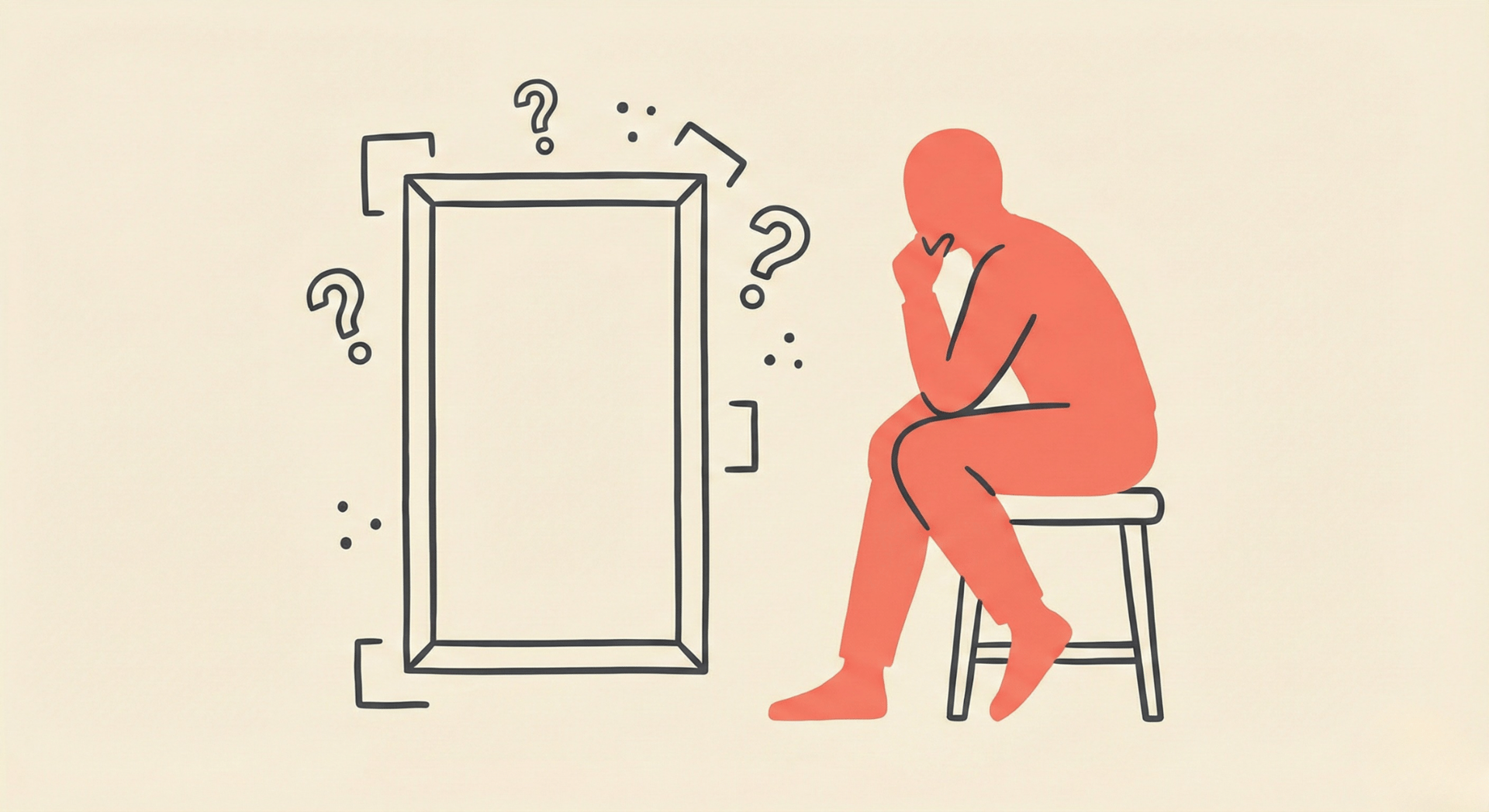
Your Turn
What's the dumbest question you've been too scared to ask at work this month?
Or flip it: What's a question someone asked you that made you think, "Thank god they said it out loud - I was wondering the same thing"?
Drop your confession in the comments. Bonus points if it's wildly specific, slightly embarrassing, or involves acronyms you've been pretending to understand for six months.
The juiciest ones might just make it into a future Espresso.
(And if you're feeling brave - go ask that question this week. Report back. We'll celebrate you.)
Closing Transmission
The best teams aren't the ones with all the answers.
They're the ones where someone can say "I'm lost" and three other people admit "Yeah, me too."
Curiosity isn't a distraction from the work. It is the work.
So this week, ask the dumb question. Out loud. In public. Without Googling first.
Not because you need the answer (though you probably do).
Because someone else needs to hear you ask it.
Corporate polish is overrated. But a well-timed "Wait, what?" is timeless.
— The (R) Generation Team 🧡 🫶🏻
PS: If no one's told you today - your confusion is valid. And probably shared by at least three other people who are also staying muted.

👨💻 Big Desk Energy: our biggest startup insights, & stories
✈️ Nomad Cloud: get the latest on remote work and location independence.
🌎 Thrive Remotely: lifestyle and wellness for remote workers
🦄 Mostly Human: midlife women getting creative with AI
👩🎤 Customer Success Jobs: our remote high-paying jobs for you
🤖 Americans Abroad: insights about visas, residency, & cost of living
🔴 Creator Spotlight: inspiration for world class creators journeys

BE A PART OF
THE R GENERATION COMMUNITY

 JOIN A GLOBAL COMMUNITYConnect with 7,000+ remote professionals, creators, |  ACCESS |  ACCELERATE |
R GENERATION brings together remote professionals from 50+ countries to explore the future of work through events, workshops, and AI-powered collaboration. Join a community where curiosity meets innovation and connections transcend borders.
Join us in a collaborative and empowering environment where your ideas spark innovation, your curiosity fuels lifelong learning, and your ambition shapes the future of remote collaboration.

What did you think of this issue?BE REAL. We love hearing from you! |

 |
|

Be this person. Ask the thing. We're all waiting.
Reply